Most households in South Carolina should have the septic tank pumped every 3 to 5 years. That is the range the EPA gives for a typical home, and it holds up well across the Upstate. Where your house lands inside that range depends on a handful of things you can check today, and getting it right is the difference between a routine one-hour visit and a backup on the worst possible weekend.
Why the tank needs pumping at all
A septic tank separates what comes out of the house. Heavy solids sink and become sludge. Grease and light material float and become scum. The clearer water in the middle flows on to the drain field, where the soil finishes the job.
Bacteria in the tank break down some of the solids, but never all of them. The sludge and scum layers keep growing year after year. Once they take up too much of the tank, solids start leaving with the water and heading for the drain field. That is the real reason to pump on schedule: you are protecting the drain field, which is the most expensive part of the system to fix.
What moves your home toward the short end
Any one of these can shorten the interval. Plenty of Anderson-area homes have two or three:
- More people in the house than the system was built for. Each extra person adds water and solids every single day.
- A garbage disposal. The EPA says a home that uses one will need pumping more often.
- An older or smaller tank. Many rural homes in Anderson, Oconee and Pickens counties still run on tanks sized decades ago.
- Heavy laundry days. Several loads in a row stir the tank and push solids toward the outlet.
- You honestly don't know when it was last pumped. If nobody can remember, assume it's due.
How Upstate weather and water use catch a full tank
A tank that's close to full can seem fine for months. Trouble tends to show up when the house uses more water than usual or the ground can't take any more. In the Upstate those two things often happen together: summer thunderstorms soak the red clay over the drain field, and holidays, family visits and lake weekends fill the house with people at the same time.
The tank didn't fail overnight. It was already full, and a wet week or a full house used up the last of its room.
Signs you're overdue
Watch for drains that are slow all over the house rather than at one sink, toilets that gurgle when the washer drains, sewage odor near the tank lids or in the yard, and grass over the septic area that is greener than the rest of the lawn. Sewage coming up in a tub or floor drain is the urgent version. If that happens, stop running water and call. Rooter Express answers 24 hours a day, and the crew aims to be on the way and at your door in under 60 minutes.
What a pump-out looks like
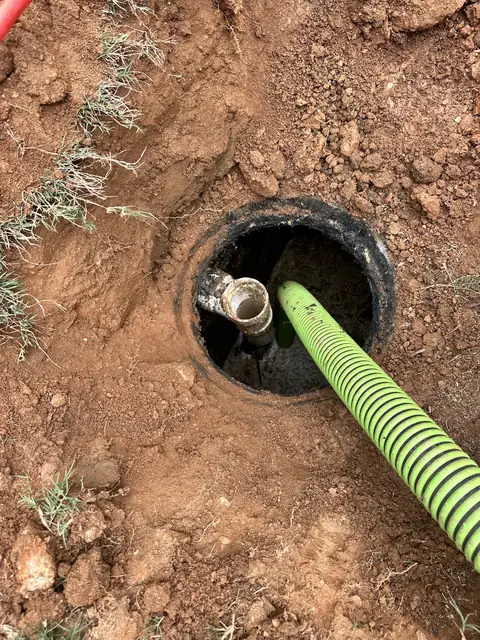
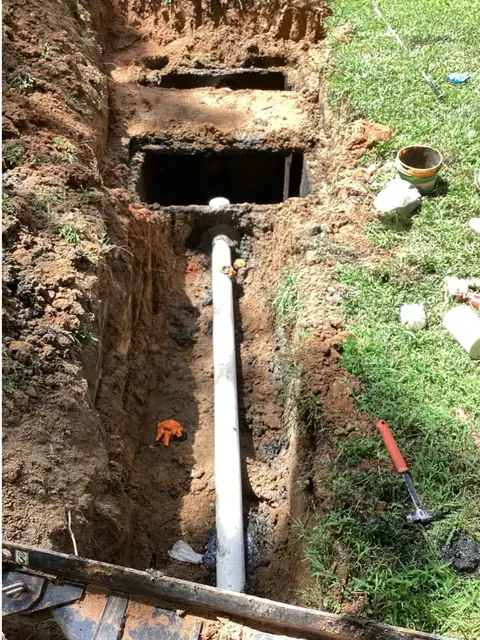
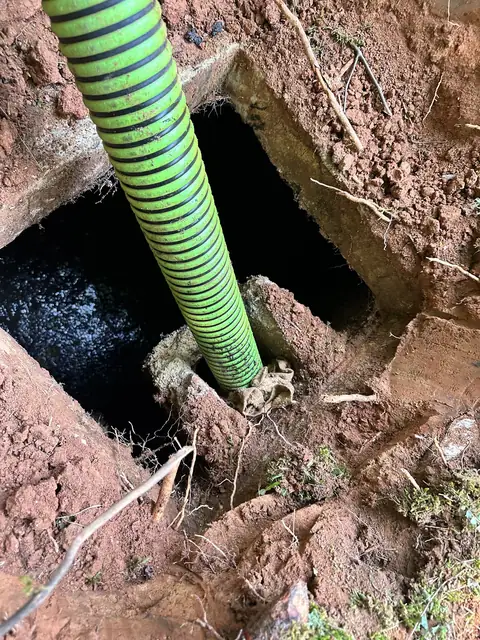
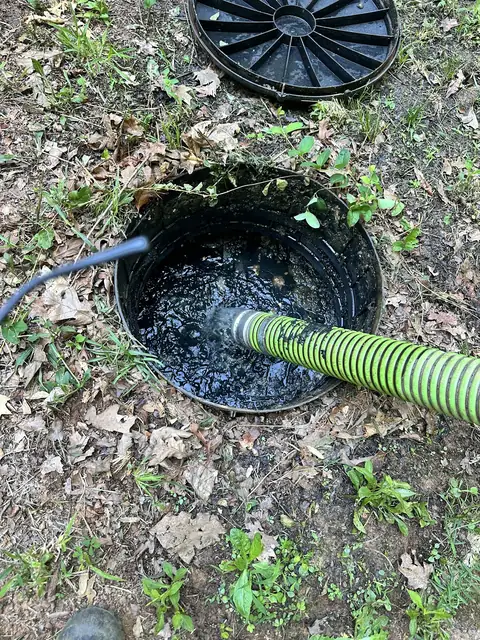
The crew finds and opens the tank, pumps out the full contents, and uses the open tank to check the parts you never see: the inlet and outlet baffles, the effluent filter if your system has one, and the general condition of the tank. Catching a failing baffle on pumping day costs far less than finding it after it has let solids into the drain field.
Most standard pump-outs take about an hour. You get upfront pricing before any work starts, and common parts ride on the trucks, so a small fix found during the visit doesn't always mean a second trip.
Quick answers
Can I wait until there's a problem to pump?
You can, but by the time a full tank causes symptoms, solids may already be moving into the drain field. Drain field repairs cost far more than routine pumping, so pumping on schedule is the cheaper path.
Do septic additives mean I can pump less often?
No. Only pumping removes the sludge and scum that build up in a tank. Additives don't take solids out, and some products can upset the tank's bacteria or harm the drain field.
How do I find out when my tank was last pumped?
Start with your closing papers or any receipts the previous owner left. Septic permits in South Carolina are handled by the SC Department of Environmental Services (SCDES), which took over from DHEC in July 2024, so your local SCDES office is the place to ask whether permit records exist for your property. If the trail goes cold, an inspection can measure the sludge level directly.
How much does pumping cost around Anderson?
It depends on tank size, how deep the lids are, and how far the hose has to run, so we price your home before we start instead of quoting a number that's wrong for half the houses that call. Pricing is upfront, rates are competitive and we price match, and military, law enforcement, educators and seniors get 10% off.
What is the Annual Free Inspection voucher?
Rooter Express offers a free, no-obligation inspection, and the Annual Free Inspection voucher is good for 12 months. It's an easy way to find out where your tank stands before you decide on pumping.
Sources
Dealing with this right now? Start with our septic tank pumping page — or skip straight to the form below.