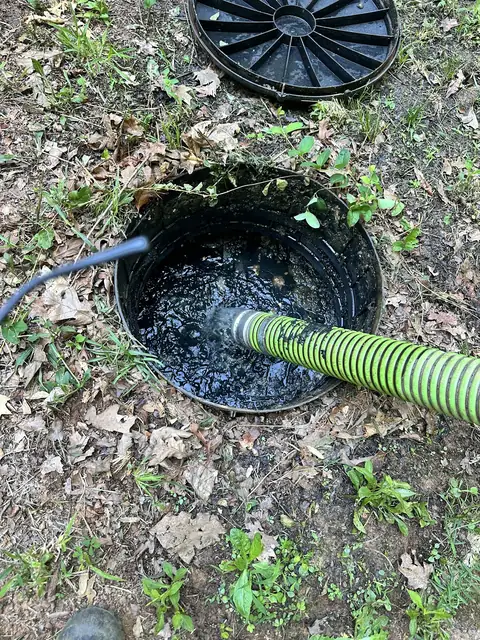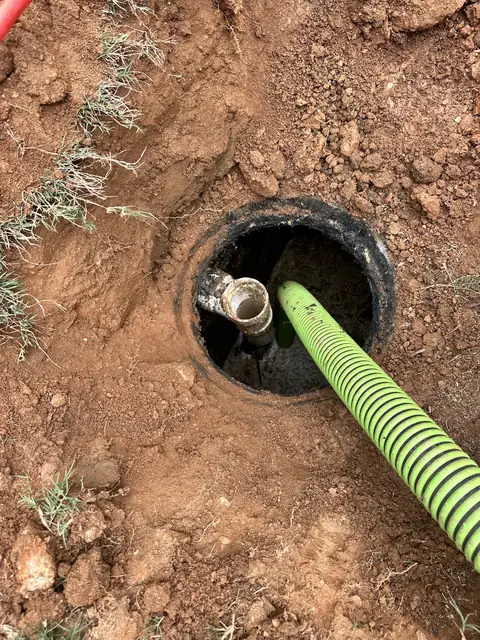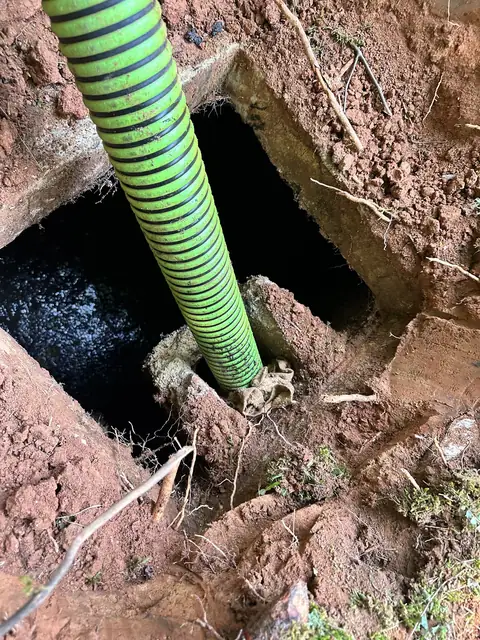
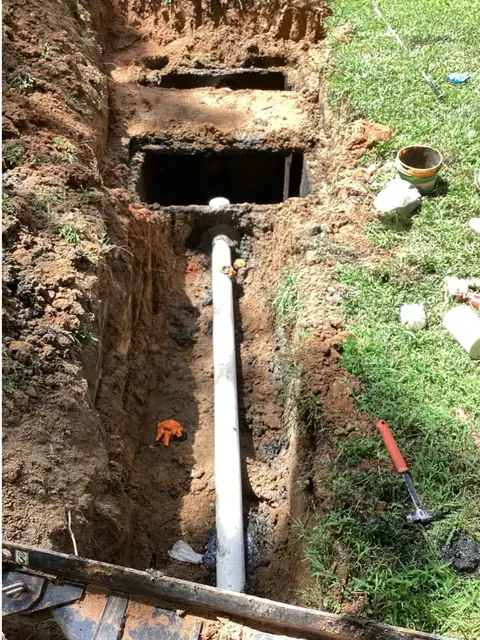
Plenty of Upstate homeowners know the pattern. The septic system runs fine for weeks, then a heavy thunderstorm rolls through and the drains slow down, the toilet gurgles, and the yard over the field turns soft. A few days later everything is normal again, until the next storm. That pattern has a cause, and it tells you a lot about how much life your system has left.
The red clay problem
Dig down a foot or two almost anywhere around Anderson and you hit the Piedmont's red clay. Clay holds water and moves it far more slowly than sandy soil does. Your drain field was designed around the soil on your lot, sized so the ground could take your home's wastewater at the rate that soil allows.
That design assumes the soil has room to spare. A heavy downpour fills that room all at once. Soaked clay takes in very little, so for hours or even days after a storm your drain field is trying to push water into ground that is already full. The water backs up into the trenches, then the tank, then the house.
At its limit, or actually failing?
If problems show up only during truly heavy rain, clear within a day or two, and the system is otherwise trouble-free, the field may simply be working at its design limit during weather that goes past it. Cutting back water use during storms and keeping an eye on it can be a reasonable plan.
If the episodes are coming more often, lasting longer, or starting after ordinary rain that never used to matter, the field is losing capacity. Common reasons include a tank overdue for pumping that is sending solids into the lines, a cracked or tilted distribution box loading one trench with all the flow, rainwater getting into the tank through a bad lid or seal, or a field that is clogging after many years of service. Each one has a different fix, and only one of them means replacing the field.
What a rain-pattern diagnosis checks
Finding the cause is detective work, and the clues are in the ground:
- The tank's water level. High before any rain points one way; high only after rain points to leaks into the tank or a saturated field.
- The distribution box. It's a common culprit and usually one of the cheaper parts to fix.
- Where runoff goes. Downspouts, driveway runoff, or a slope that sends water across the field all eat its capacity.
- Where the yard goes soft. One wet stripe suggests uneven distribution; a soggy field overall suggests saturation.
- How the problem has changed over the last few seasons. The trend tells us which direction the system is heading.
Why waiting costs more in clay country
A drain field pushed past its limit again and again gets worse over time. The soil around the trenches clogs further with each overload, and the repair options narrow. The gap between a distribution box fix and a full field replacement is often just how many storm seasons the warning signs were ignored.
Rooter Express is licensed, bonded and insured in South Carolina, gives upfront pricing before any work, and backs every job with a workmanship guarantee. A free, no-obligation inspection is the easiest first step.
Quick answers
My septic alarm goes off during storms. Should I worry?
Take it seriously. On systems with a pump, a storm alarm usually means high water in the pump tank, either from water getting in or from a field too wet to accept more. Cut water use way down and have it checked. Repeated storm alarms are a pattern, not a fluke.
Can I run the washing machine during heavy rain?
If your system has any rain sensitivity, hold off. Wet soil takes in less water, so do laundry on dry days and spread loads out.
Will regrading or a French drain fix my rain problem?
It can help if surface water is running onto the field. It won't fix a broken distribution box or a clogged field. Find the cause first, then spend money where it does the most good.
Do septic repairs in South Carolina need a permit?
Some do. South Carolina's onsite wastewater rules let the state require a permit for repairing, relocating or replacing a system or its parts when it considers one necessary. Septic permitting is now handled by the SC Department of Environmental Services (SCDES), which took over from DHEC in July 2024. Check with your local SCDES office about your specific job.
Sources
- SCDES — new department launches (July 2024)
- S.C. Code Regs. R.61-56.104 — permits to construct and operate
Dealing with this right now? Start with our septic system repair page — or skip straight to the form below.